
Lent is our opportunity to prepare ourselves and to grow deeper in our relationship with God in preparation for the celebration of the Paschal mystery of Christ – His passion, death and resurrection. During these 40 days, beginning Ash Wednesday through the Saturday before Easter, we are given an opportunity to reflect and transform our connection with Christ.
As St. Teresa of Calcutta shared, “As Lent is the time for greater love, listen to Jesus’ thirst…He knows your weakness. He wants only your love, wants only the chance to love you.”
Let us grow deeper in our love and our relationship with Christ by carrying out the three pillars of Lent: prayer, fasting, and almsgiving.
Message of His Holiness Pope Leo for Lent
(English) Pope Leo's Message
Message of the Holy Father
Listening and Fasting: Lent as a Time of Conversion
Dear brothers and sisters,
Lent is a time in which the Church, guided by a sense of maternal care, invites us to place the mystery of God back in the center of our lives, in order to find renewal in our faith and keep our hearts from being consumed by the anxieties and distractions of daily life.
Every path towards conversion begins by allowing the word of God to touch our hearts and welcoming it with a docile spirit. There is a relationship between the word, our acceptance of it and the transformation it brings about. For this reason, the Lenten journey is a welcome opportunity to heed the voice of the Lord and renew our commitment to following Christ, accompanying him on the road to Jerusalem, where the mystery of his passion, death and resurrection will be fulfilled.
Listening
This year, I would first like to consider the importance of making room for the word through listening. The willingness to listen is the first way we demonstrate our desire to enter into relationship with someone.
In revealing himself to Moses in the burning bush, God himself teaches us that listening is one of his defining characteristics: “I have observed the misery of my people who are in Egypt; I have heard their cry” (Ex 3:7). Hearing the cry of the oppressed is the beginning of a story of liberation in which the Lord calls Moses, sending him to open a path of salvation for his children who have been reduced to slavery.
Our God is one who seeks to involve us. Even today he shares with us what is in his heart. Because of this, listening to the word in the liturgy teaches us to listen to the truth of reality. In the midst of the many voices present in our personal lives and in society, Sacred Scripture helps us to recognize and respond to the cry of those who are anguished and suffering. In order to foster this inner openness to listening, we must allow God to teach us how to listen as he does. We must recognize that “the condition of the poor is a cry that, throughout human history, constantly challenges our lives, societies, political and economic systems, and, not least, the Church.”[1]
Fasting
If Lent is a time for listening, fasting is a concrete way to prepare ourselves to receive the word of God. Abstaining from food is an ancient ascetic practice that is essential on the path of conversion. Precisely because it involves the body, fasting makes it easier to recognize what we “hunger” for and what we deem necessary for our sustenance. Moreover, it helps us to identify and order our “appetites,” keeping our hunger and thirst for justice alive and freeing us from complacency. Thus, it teaches us to pray and act responsibly towards our neighbor.
With spiritual insight, Saint Augustine helps us to understand the tension between the present moment and the future fulfilment that characterizes this custody of the heart. He observes that: “In the course of earthly life, it is incumbent upon men and women to hunger and thirst for justice, but to be satisfied belongs to the next life. Angels are satisfied with this bread, this food. The human race, on the other hand, hungers for it; we are all drawn to it in our desire. This reaching out in desire expands the soul and increases its capacity.”[2] Understood in this way, fasting not only permits us to govern our desire, purifying it and making it freer, but also to expand it, so that it is directed towards God and doing good.
However, in order to practice fasting in accordance with its evangelical character and avoid the temptation that leads to pride, it must be lived in faith and humility. It must be grounded in communion with the Lord, because “those who are unable to nourish themselves with the word of God do not fast properly.”[3] As a visible sign of our inner commitment to turn away from sin and evil with the help of grace, fasting must also include other forms of self-denial aimed at helping us to acquire a more sober lifestyle, since “austerity alone makes the Christian life strong and authentic.”[4]
In this regard, I would like to invite you to a very practical and frequently unappreciated form of abstinence: that of refraining from words that offend and hurt our neighbor. Let us begin by disarming our language, avoiding harsh words and rash judgement, refraining from slander and speaking ill of those who are not present and cannot defend themselves. Instead, let us strive to measure our words and cultivate kindness and respect in our families, among our friends, at work, on social media, in political debates, in the media and in Christian communities. In this way, words of hatred will give way to words of hope and peace.
Together
Finally, Lent emphasizes the communal aspect of listening to the word and fasting. The Bible itself underlines this dimension in multiple ways. For example, the Book of Nehemiah recounts how the people gathered to listen to the public reading of the Law, preparing to profess their faith and worship through fasting, so as to renew the covenant with God (cf. 9:1-3).
Likewise, our parishes, families, ecclesial groups and religious communities are called to undertake a shared journey during Lent, in which listening to the word of God, as well as to the cry of the poor and of the earth, becomes part of our community life, and fasting a foundation for sincere repentance. In this context, conversion refers not only to one’s conscience, but also to the quality of our relationships and dialogue. It means allowing ourselves to be challenged by reality and recognizing what truly guides our desires — both within our ecclesial communities and as regards humanity’s thirst for justice and reconciliation.
Dear friends, let us ask for the grace of a Lent that leads us to greater attentiveness to God and to the least among us. Let us ask for the strength that comes from the type of fasting that also extends to our use of language, so that hurtful words may diminish and give way to a greater space for the voice of others. Let us strive to make our communities places where the cry of those who suffer finds welcome, and listening opens paths towards liberation, making us ready and eager to contribute to building a civilization of love.
I impart my heartfelt blessing upon all of you and your Lenten journey.
From the Vatican, 5 February 2026, Memorial of Saint Agatha, Virgin and Martyr
LEO PP. XIV
______________________
[1] Apostolic Exhortation Dilexi Te (4 October 2025), 9.
[2] Augustine The Usefulness of Fasting, 1, 1.
[3] Benedict XVI, Catechesis (9 March 2011).
[4] Paul VI, Catechesis (8 February1978).
.
(Spanish)
Messaggio del Santo Padre
Ascoltare e digiunare.
La Quaresima come tempo di conversione
Cari fratelli e sorelle!
La Quaresima è il tempo in cui la Chiesa, con sollecitudine materna, ci invita a rimettere il mistero di Dio al centro della nostra vita, perché la nostra fede ritrovi slancio e il cuore non si disperda tra le inquietudini e le distrazioni di ogni giorno.
Ogni cammino di conversione inizia quando ci lasciamo raggiungere dalla Parola e la accogliamo con docilità di spirito. Vi è un legame, dunque, tra il dono della Parola di Dio, lo spazio di ospitalità che le offriamo e la trasformazione che essa opera. Per questo, l’itinerario quaresimale diventa un’occasione propizia per prestare l’orecchio alla voce del Signore e rinnovare la decisione di seguire Cristo, percorrendo con Lui la via che sale a Gerusalemme, dove si compie il mistero della sua passione, morte e risurrezione.
Ascoltare
Quest’anno vorrei richiamare l’attenzione, in primo luogo, sull’importanza di dare spazio alla Parola attraverso l’ascolto, poiché la disponibilità ad ascoltare è il primo segno con cui si manifesta il desiderio di entrare in relazione con l’altro.
Dio stesso, rivelandosi a Mosè dal roveto ardente, mostra che l’ascolto è un tratto distintivo del suo essere: «Ho osservato la miseria del mio popolo in Egitto e ho udito il suo grido» (Es 3,7). L’ascolto del grido dell’oppresso è l’inizio di una storia di liberazione, nella quale il Signore coinvolge anche Mosè, inviandolo ad aprire una via di salvezza ai suoi figli ridotti in schiavitù.
È un Dio coinvolgente, che oggi raggiunge anche noi coi pensieri che fanno vibrare il suo cuore. Per questo, l’ascolto della Parola nella liturgia ci educa a un ascolto più vero della realtà: tra le molte voci che attraversano la nostra vita personale e sociale, le Sacre Scritture ci rendono capaci di riconoscere quella che sale dalla sofferenza e dall’ingiustizia, perché non resti senza risposta. Entrare in questa disposizione interiore di recettività significa lasciarsi istruire oggi da Dio ad ascoltare come Lui, fino a riconoscere che «la condizione dei poveri rappresenta un grido che, nella storia dell’umanità, interpella costantemente la nostra vita, le nostre società, i sistemi politici ed economici e, non da ultimo, anche la Chiesa».[1]
Digiunare
Se la Quaresima è tempo di ascolto, il digiuno costituisce una pratica concreta che dispone all’accoglienza della Parola di Dio. L’astensione dal cibo, infatti, è un esercizio ascetico antichissimo e insostituibile nel cammino di conversione. Proprio perché coinvolge il corpo, rende più evidente ciò di cui abbiamo “fame” e ciò che riteniamo essenziale per il nostro sostentamento. Serve quindi a discernere e ordinare gli “appetiti”, a mantenere vigile la fame e la sete di giustizia, sottraendola alla rassegnazione, istruendola perché si faccia preghiera e responsabilità verso il prossimo.
Sant’Agostino, con finezza spirituale, lascia intravedere la tensione tra il tempo presente e il compimento futuro che attraversa questa custodia del cuore, quando osserva che: «Nel corso della vita terrena compete agli uomini aver fame e sete di giustizia, ma esserne appagati appartiene all’altra vita. Gli angeli si saziano di questo pane, di questo cibo. Gli uomini invece ne hanno fame, sono tutti protesi nel desiderio di esso. Questo protendersi nel desiderio dilata l’anima, ne aumenta la capacità».[2] Il digiuno, compreso in questo senso, ci consente non soltanto di disciplinare il desiderio, di purificarlo e renderlo più libero, ma anche di espanderlo, in modo tale che si rivolga a Dio e si orienti ad agire nel bene.
Tuttavia, affinché il digiuno conservi la sua verità evangelica e rifugga dalla tentazione di inorgoglire il cuore, dev’essere sempre vissuto nella fede e nell’umiltà. Esso domanda di restare radicato nella comunione con il Signore, perché «non digiuna veramente chi non sa nutrirsi della Parola di Dio».[3] In quanto segno visibile del nostro impegno interiore di sottrarci, con il sostegno della grazia, al peccato e al male, il digiuno deve includere anche altre forme di privazione volte a farci acquisire uno stile di vita più sobrio, poiché «solo l’austerità rende forte e autentica la vita cristiana».[4]
Vorrei per questo invitarvi a una forma di astensione molto concreta e spesso poco apprezzata, cioè quella dalle parole che percuotono e feriscono il nostro prossimo. Cominciamo a disarmare il linguaggio, rinunciando alle parole taglienti, al giudizio immediato, al parlar male di chi è assente e non può difendersi, alle calunnie. Sforziamoci invece di imparare a misurare le parole e a coltivare la gentilezza: in famiglia, tra gli amici, nei luoghi di lavoro, nei social media, nei dibattiti politici, nei mezzi di comunicazione, nelle comunità cristiane. Allora tante parole di odio lasceranno il posto a parole di speranza e di pace.
Insieme
Infine, la Quaresima mette in evidenza la dimensione comunitaria dell’ascolto della Parola e della pratica del digiuno. Anche la Scrittura sottolinea questo aspetto in molti modi. Ad esempio, quando narra, nel libro di Neemia, che il popolo si radunò per ascoltare la lettura pubblica del libro della Legge e, praticando il digiuno, si dispose alla confessione di fede e all’adorazione, in modo da rinnovare l’alleanza con Dio (cfr Ne 9,1-3).
Allo stesso modo, le nostre parrocchie, le famiglie, i gruppi ecclesiali e le comunità religiose sono chiamati a compiere in Quaresima un cammino condiviso, nel quale l’ascolto della Parola di Dio, come pure del grido dei poveri e della terra, diventi forma della vita comune e il digiuno sostenga un pentimento reale. In questo orizzonte, la conversione riguarda, oltre alla coscienza del singolo, anche lo stile delle relazioni, la qualità del dialogo, la capacità di lasciarsi interrogare dalla realtà e di riconoscere ciò che orienta davvero il desiderio, sia nelle nostre comunità ecclesiali, sia nell’umanità assetata di giustizia e riconciliazione.
Carissimi, chiediamo la grazia di una Quaresima che renda più attento il nostro orecchio a Dio e agli ultimi. Chiediamo la forza di un digiuno che attraversi anche la lingua, perché diminuiscano le parole che feriscono e cresca lo spazio per la voce dell’altro. E impegniamoci affinché le nostre comunità diventino luoghi in cui il grido di chi soffre trovi accoglienza e l’ascolto generi cammini di liberazione, rendendoci più pronti e solerti nel contribuire a edificare la civiltà dell’amore.
Di cuore benedico tutti voi e il vostro cammino quaresimale.
Dal Vaticano, 5 febbraio 2026, memoria di Sant’Agata, vergine e martire.
LEONE PP. XIV
____________________
[1] Esort. ap. Dilexi te (4 ottobre 2025), 9.
[2] S. Agostino, L’utilità del digiuno, 1, 1.
[3] Benedetto XVI, Catechesi (9 marzo 2011).
[4] S. Paolo VI, Catechesi (8 febbraio 1978).
(Vietnamese)
Anh chị em thân mến!
Mùa Chay là thời gian mà Giáo hội, với sự ân cần đầy từ mẫu, mời gọi chúng ta đặt mầu nhiệm Thiên Chúa vào lại tâm điểm của đời sống mình, để đức tin của chúng ta tìm lại được sức bật và tâm hồn chúng ta không bị phân tán giữa những lo âu và xao nhãng của cuộc sống hằng ngày.
Mọi hành trình hoán cải bắt đầu khi chúng ta để cho Lời Chúa chạm đến mình và đón nhận Lời ấy với một tinh thần nhu thuận. Vì thế, có một mối liên hệ giữa hồng ân Lời Chúa, không gian tiếp đón mà chúng ta dành cho Lời, và sự biến đổi mà Lời ấy thực hiện. Do đó, hành trình Mùa Chay trở thành một cơ hội thuận tiện để lắng nghe tiếng Chúa và làm mới lại quyết định bước theo Đức Kitô, cùng Người tiến lên Giêrusalem, nơi mầu nhiệm cuộc khổ nạn, cái chết và sự phục sinh của Người được hoàn tất.
Lắng nghe
Năm nay, trước hết tôi muốn mời gọi sự chú tâm đến tầm quan trọng của việc dành không gian cho Lời Chúa thông qua việc lắng nghe, bởi sự sẵn sàng lắng nghe là dấu chỉ đầu tiên thể hiện ước muốn bước vào tương quan với người khác.
Chính Thiên Chúa, khi tỏ mình cho Môsê nơi bụi gai cháy, đã cho thấy lắng nghe là nét đặc trưng trong bản thể của Người: “Ta đã thấy cảnh khổ cực của dân Ta bên Ai Cập và Ta đã nghe tiếng chúng kêu than” (Xh 3,7). Việc lắng nghe tiếng kêu của người bị áp bức là khởi đầu của một lịch sử giải phóng, trong đó Thiên Chúa cũng lôi cuốn cả ông Môsê tham gia, sai ông đi mở ra con đường cứu độ cho con cái Người đang sống trong cảnh nô lệ.
Thiên Chúa là Đấng dấn thân, hôm nay cũng chạm đến chúng ta bằng những tư tưởng làm rung động trái tim Người. Vì thế, việc lắng nghe Lời Chúa trong phụng vụ dạy chúng ta biết lắng nghe thực tại một cách chân thực hơn: giữa muôn vàn tiếng nói đi qua đời sống cá nhân và xã hội, Kinh Thánh giúp chúng ta nhận ra những tiếng kêu phát xuất từ đau khổ và bất công, để tiếng kêu ấy không bị bỏ mặc không hồi đáp. Bước vào thái độ nội tâm này nghĩa là để Thiên Chúa dạy chúng ta biết lắng nghe như Người, cho đến khi nhận ra rằng “thân phận của những người nghèo đại diện cho một tiếng kêu mà trong lịch sử nhân loại, luôn không ngừng chất vấn đời sống chúng ta, xã hội chúng ta, các hệ thống chính trị, kinh tế và cuối cùng là cả Giáo hội nữa”.[1]
Ăn chay
Nếu Mùa Chay là thời gian lắng nghe, thì việc ăn chay tạo nên một thực hành cụ thể giúp ta sẵn sàng đón nhận Lời Chúa. Việc kiêng khem là một hình thức khổ chế rất cổ xưa và không thể thay thế trên hành trình hoán cải. Chính vì liên quan đến thân xác, nó làm nổi bật điều ta đang “đói”, và những gì chúng ta coi là thiết yếu cho sự sinh tồn của mình. Vì vậy, ăn chay giúp ta biết phân định và sắp xếp lại những “ham muốn”, giữ cho cơn đói khát công lý luôn tỉnh thức, không rơi vào sự cam chịu, nhưng biến nó thành lời cầu nguyện và trách nhiệm đối với tha nhân.
Thánh Augustinô, với sự tinh tế thiêng liêng, đã cho thấy sự căng thẳng giữa thời hiện tại và sự viên mãn tương lai thông qua việc canh giữ tâm hồn này khi ngài nhận xét rằng: “Trong cuộc đời trần thế, con người cần phải đói khát công lý, nhưng việc được no thỏa thuộc về đời sau. Các thiên thần được no thỏa bằng tấm bánh này, bằng lương thực này. Ngược lại, con người lại khao khát nó, tất cả đều hướng về nó với lòng mong mỏi. Sự hướng về khao khát này làm giãn nở tâm hồn và gia tăng khả năng của nó”.[2] Hiểu theo nghĩa này, ăn chay không chỉ cho phép chúng ta kỷ luật lòng ham muốn, thanh luyện và làm cho nó tự do hơn, mà còn mở rộng nó, để nó hướng về Thiên Chúa và hướng đến việc thực hành điều thiện.
Tuy nhiên, để việc ăn chay giữ được chân lý Tin Mừng và xa lánh cơn cám dỗ làm cho lòng mình trở nên kiêu ngạo, nó phải luôn được sống trong đức tin và khiêm nhường. Việc ăn chay đòi hỏi phải luôn bén rễ trong sự hiệp thông với Chúa, bởi vì “không ai thực sự ăn chay nếu người đó không biết nuôi dưỡng mình bằng Lời Chúa”[3]. Là dấu chỉ hữu hình cho sự dấn thân nội tâm của chúng ta nhằm xa lánh tội lỗi và điều ác với sự nâng đỡ của ân sủng, việc ăn chay cũng phải bao gồm các hình thức từ bỏ khác nhằm giúp chúng ta thủ đắc một lối sống giản dị hơn, bởi vì “chỉ có sự khổ chế mới làm cho đời sống Kitô hữu trở nên mạnh mẽ và chân thật”.[4]
Vì lý do này, tôi muốn mời gọi anh chị em một hình thức kiêng khem rất cụ thể nhưng thường ít được coi trọng: đó là kiêng bớt những lời nói gây tổn thương và đau lòng cho người khác. Hãy bắt đầu giải giới nơi ngôn ngữ của mình: từ bỏ lời cay nghiệt, những xét đoán vội vàng, việc nói xấu người vắng mặt không thể tự bảo vệ mình, và những lời vu khống. Thay vào đó, hãy học cách cân nhắc lời nói và nuôi dưỡng sự hiền hòa: trong gia đình, giữa bạn bè, nơi làm việc, trên mạng xã hội, trong các cuộc tranh luận chính trị, trên các phương tiện truyền thông, và trong các cộng đoàn Kitô hữu. Khi đó, nhiều lời nói thù hận sẽ nhường chỗ cho những lời hy vọng và bình an.
Cùng nhau
Sau hết, Mùa Chay làm nổi bật chiều kích cộng đoàn của việc lắng nghe Lời Chúa và thực hành ăn chay. Kinh Thánh cũng nhấn mạnh khía cạnh này theo nhiều cách. Ví dụ, trong sách Nê-hê-mi-a kể rằng dân chúng đã tụ họp lại để nghe đọc sách Luật công khai và qua việc ăn chay, họ đã chuẩn bị cho việc tuyên xưng đức tin và thờ phượng, để làm mới lại giao ước với Thiên Chúa (x. Nê 9,1-3).
Tương tự như vậy, các giáo xứ, gia đình, hội đoàn và cộng đoàn tu trì được mời gọi bước đi chung trong Mùa Chay, để việc lắng nghe Lời Chúa – cũng như tiếng kêu của người nghèo và của trái đất – trở thành hình thái của đời sống chung, còn việc ăn chay nâng đỡ một sự sám hối thực sự. Trong viễn tượng này, sự hoán cải liên quan không chỉ đến lương tâm của từng cá nhân mà còn đến phong cách của các mối tương quan, chất lượng của cuộc đối thoại, khả năng để cho thực tại chất vấn mình và nhận ra điều gì thực sự định hướng lòng ham muốn, cả trong các cộng đoàn Giáo hội cũng như trong một nhân loại đang khao khát công lý và hòa giải.
Anh chị em rất thân mến, chúng ta hãy xin ơn để sống một Mùa Chay làm cho tai ta nhạy bén hơn trước Thiên Chúa và những người bé nhỏ. Ước mong sức mạnh của một cuộc ăn chay cũng chạm đến cả lưỡi, để những lời gây thương tích giảm bớt và mở ra nhiều không gian hơn cho tiếng nói của người khác. Và chúng ta hãy dấn thân để các cộng đoàn trở nên nơi tiếng kêu của người đau khổ được đón nhận, và việc lắng nghe làm nảy sinh những con đường giải phóng, giúp ta sẵn sàng và ân cần hơn trong việc góp phần xây dựng nền văn minh tình thương.
Tôi hết lòng chúc lành cho tất cả anh chị em và hành trình Mùa Chay của anh chị em.
Tại Vatican, ngày 5 tháng 2 năm 2026, lễ nhớ thánh Agatha, trinh nữ và tử đạo.
LÊÔ XIV
[1] Tông huấn Dilexi te (4/10/2025), 9.
[2] Thánh Augustinô, Lợi ích của Việc Ăn chay, 1, 1.
[3] ĐGH Bênêdictô XVI, Bài giáo lý (09/03/2011).
[4] Thánh GH Phaolô, Bài giáo lý (08/02/978).
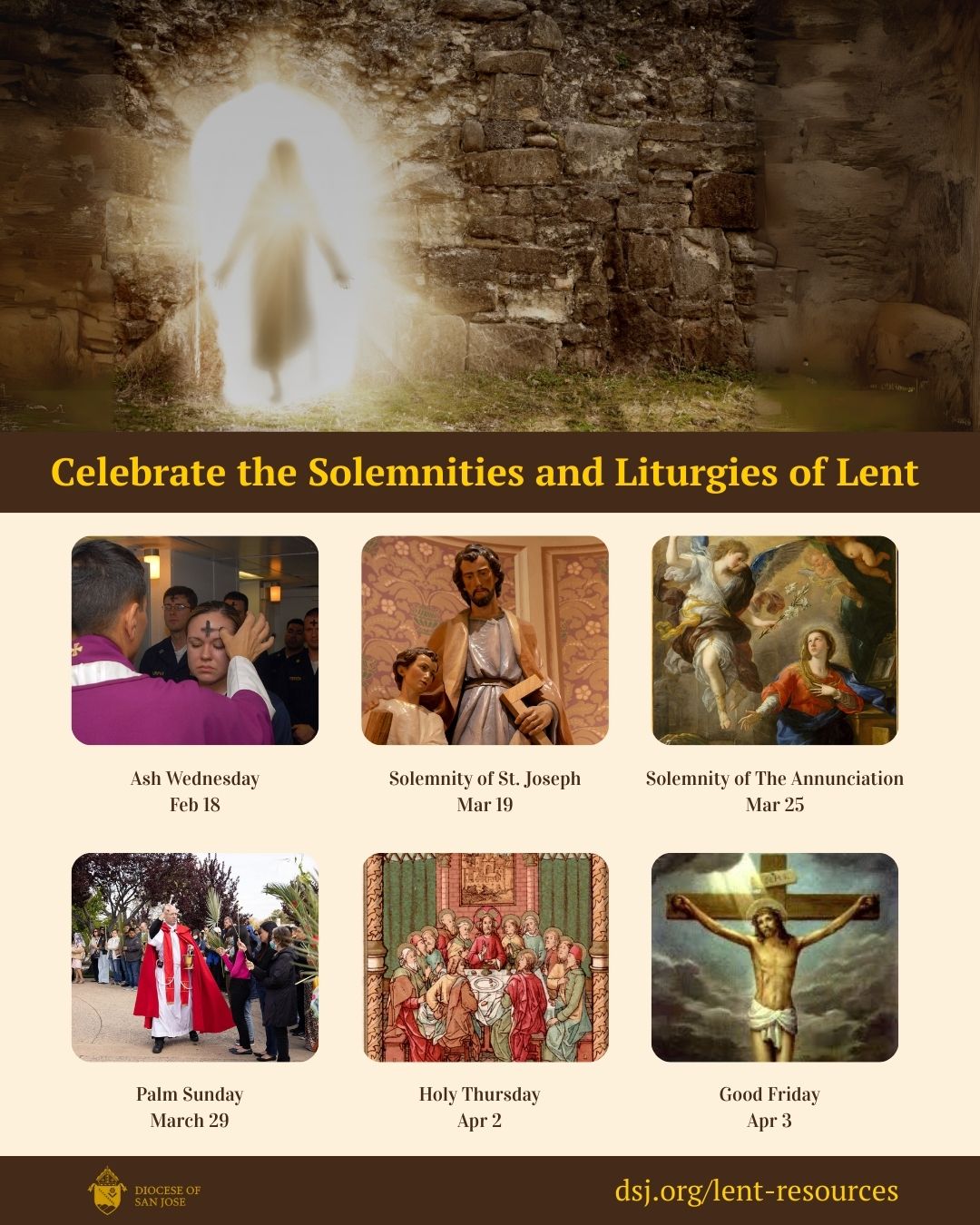
Lent Reflection | Reflexión de Cuaresma
Reflections used with permission by Archdiocese of Seattle.
First Week Lent Reading and Reflection - Primera semana de Cuaresma
First week of Lent reading and reflection:
READING
Deuteronomy 26:4-10
Moses spoke to the people, saying:
“The priest shall receive the basket from you and shall set it in front of the altar of the LORD, your God.
Then you shall declare before the Lord, your God, ‘My father was a wandering Aramean
who went down to Egypt with a small household and lived there as an alien.
But there he became a nation great, strong, and numerous.
When the Egyptians maltreated and oppressed us, imposing hard labor upon us, we cried to the LORD, the God of our fathers,
and he heard our cry and saw our affliction, our toil, and our oppression.
He brought us out of Egypt with his strong hand and outstretched arm, with terrifying power, with signs and wonders; and bringing us into this country,
he gave us this land flowing with milk and honey.
Therefore, I have now brought you the first fruits of the products of the soil which you, O LORD, have given me.’
And having set them before the LORD, your God, you shall bow down in his presence.”
REFLECTION QUESTIONS:
- Moses instructs the people to offer the first fruits of the land to God, and to remember where they came from and what God has done for them. What’s your “origin story,” as a family… as an individual? How has it shaped who you are? How has God been active in your story and that of your family, your people?
- In this Jubilee Year, what do we need to remember as a parish family, as a Church? How does this remembering challenge us in the present?
Primera semana de Cuaresma de lectura y reflexión:
LECTURA
Deuteronomio 26:4-10
Moisés habló al pueblo diciendo
“El sacerdote tomará la canasta que tú le entregues, la depositará ante el altar,
y tú pronunciarás estas palabras en presencia del Señor, tu Dios. «Mi padre era un arameo errante que bajó a Egipto y se refugió allí con unos pocos hombres,
pero luego se convirtió en una nación grande, fuerte y numerosa.
Entonces pedimos auxilio al Señor, el Dios de nuestros padres, y él escuchó nuestra voz. El vio nuestra miseria. nuestro cansancio y nuestra opresión.
y nos hizo salir de Egipto con el poder de su mano y la fuerza de su brazo, en medio de un gran terror, de signos y prodigios.
El nos trajo a este lugar y nos dio esta tierra que mana leche y miel.
Por eso ofrezco ahora las primicias de los frutos del suelo que tú, Señor, me diste’.
Tú depositarás las primicias ante el Señor, tu Dios, y te postrarás ante el Señor, tu Dios, y te postrarás delante de él.
PREGUNTAS DE REFLEXIÓN:
- Moisés ordena al pueblo que ofrezca a Dios las primicias de la tierra y que recuerde de dónde viene y lo que Dios ha hecho por él. ¿Cuál es tu “historia de origen”, como familia… como individuo? ¿Cómo ha conformado lo que eres? ¿Cómo ha actuado Dios en tu historia y en la de tu familia, tu pueblo?
- En este Año Jubilar, ¿qué necesitamos recordar como familia parroquial, como Iglesia? ¿Cómo nos interpela este recuerdo en el presente?
Second Week Lent Reading and Reflection - Segunda semana de Cuaresma de lectura y reflexión
Second week of Lent reading and reflection:
READING
Luke 9:28b-33
Jesus took Peter, John, and James and went up the mountain to pray.
While he was praying his face changed in appearance and his clothing became dazzling white.
And behold, two men were conversing with him, Moses and Elijah, who appeared in glory and spoke of his exodus that he was going to accomplish in Jerusalem.
Peter and his companions had been overcome by sleep, but becoming fully awake, they saw his glory and the two men standing with him.
As they were about to part from him, Peter said to Jesus, “Master, it is good that we are here; let us make three tents, one for you, one for Moses, and one for Elijah.”
But he did not know what he was saying.
REFLECTION QUESTIONS:
- Mountaintop moments. What is a mountaintop moment for you, when you knew that the Lord was close, or when you understood something about God that you hadn’t before?
- Peter is filled with wonder at the glimpse of Jesus in majesty on the mountaintop, but he struggles to accept the fact that Jesus must suffer and die before he enters into his glory. What realities do we avoid? What sufferings do we struggle to face?
Segunda semana de Cuaresma de lectura y reflexión:
LECTURA
Lucas 9:28b-33
Jesús tomó a Pedro, Juan y Santiago y subió al monte a orar.
Mientras rezaba, su rostro cambió de aspecto y su ropa se volvió de un blanco deslumbrante.
Y he aquí que conversaban con él dos hombres, Moisés y Elías, que aparecieron en gloria y le hablaron del éxodo que iba a realizar en Jerusalén.
Pedro y sus compañeros habían sido vencidos por el sueño, pero, al despertarse del todo, vieron su gloria y a los dos hombres que estaban con él.
Cuando estaban a punto de separarse de él, Pedro dijo a Jesús: “Maestro, es bueno que estemos aquí; hagamos tres tiendas, una para ti, otra para Moisés y otra para Elías.”
Pero no sabía lo que decía.
PREGUNTAS DE REFLEXIÓN:
- Momentos en la cima de una montaña. ¿Cuál es para ti un momento en la cima de una montaña, en el que supiste que el Señor estaba cerca, o en el que comprendiste algo sobre Dios que no habías comprendido antes?
- Pedro se llena de asombro al ver a Jesús en majestad en la cima de la montaña, pero le cuesta aceptar el hecho de que Jesús debe sufrir y morir antes de entrar en su gloria. ¿Qué realidades evitamos? ¿Qué sufrimientos nos cuesta afrontar?
Third Week Lent Reading and Reflection - Tercera semana de lectura y reflexión de Cuaresma:
READING
Exodus 3: 1-8
Moses was tending the flock of his father-in-law Jethro, the priest of Midian. Leading the flock across the desert, he came to Horeb, the mountain of God. There an angel of the LORD appeared to Moses in fire flaming out of a bush. As he looked on, he was surprised to see that the bush, though on fire, was not consumed.
So Moses decided, “I must go over to look at this remarkable sight, and see why the bush is not burned.”
When the LORD saw him coming over to look at it more closely, God called out to him from the bush, “Moses! Moses!”
He answered, “Here I am.”
God said, “Come no nearer! Remove the sandals from your feet, for the place where you stand is holy ground. I am the God of your fathers,“ he continued, “the God of Abraham, the God of Isaac, the God of Jacob.”
Moses hid his face, for he was afraid to look at God.
But the LORD said, “I have witnessed the affliction of my people in Egypt and have heard their cry of complaint against their slave drivers, so I know well what they are suffering. Therefore I have come down to rescue them from the hands of the Egyptians and lead them out of that land into a good and spacious land, a land flowing with milk and honey.”
REFLECTION QUESTIONS:
- Think of a time when God asked you to do something you didn’t think you were capable of. How did you respond?
- Moses’ encounter with God leads to his mission—to bring the Israelites into the promised land. Where do you sense God calling us to mission, as individuals or as parish communities?
LECTURA
Éxodo 3: 1-8
Moisés cuidaba el rebaño de su suegro Jetro, sacerdote de Madián. Conduciendo el rebaño por el desierto, llegó a Horeb, el monte de Dios. Allí se le apareció a Moisés un ángel de Yahveh en fuego que salía de una zarza. Al mirar, se sorprendió al ver que la zarza, aunque ardía, no se consumía.
Entonces Moisés decidió: “Debo acercarme a contemplar este espectáculo extraordinario y ver por qué no se quema la zarza”.
Cuando Yahveh le vio acercarse para mirarla más de cerca, Dios le llamó desde la zarza: “¡Moisés! Moisés!”
Él respondió: “Aquí estoy”.
Dios dijo: “¡No os acerquéis! Quitaos las sandalias de los pies, porque el lugar donde estáis es tierra santa. Yo soy el Dios de tus padres -continuó-, el Dios de Abraham, el Dios de Isaac, el Dios de Jacob.”
Moisés ocultó su rostro, pues tenía miedo de mirar a Dios.
Pero Yahveh dijo: “He sido testigo de la aflicción de mi pueblo en Egipto y he oído su grito de queja contra sus esclavistas, así que sé bien lo que están sufriendo. Por eso he descendido para rescatarlos de manos de los egipcios y conducirlos fuera de aquella tierra a una tierra buena y espaciosa, una tierra que mana leche y miel.”
PREGUNTAS DE REFLEXIÓN:
- Piensa en una ocasión en la que Dios te pidió que hicieras algo de lo que no te creías capaz. ¿Cómo respondiste?
- El encuentro de Moisés con Dios le lleva a su misión: llevar a los israelitas a la tierra prometida. ¿Dónde sientes que Dios nos llama a la misión, como individuos o como comunidades parroquiales?
Fourth week of Lent reading and reflection - Tercera semana de lectura y reflexión de Cuaresma:
Fourth week of Lent reading and reflection:
READING
Luke 15:20-24
…While he was still a long way off,
his father caught sight of him, and was filled with compassion.
He ran to his son, embraced him and kissed him.
His son said to him, ‘Father, I have sinned against heaven and against you; I no longer deserve to be called your son.’
But his father ordered his servants,
‘Quickly bring the finest robe and put it on him; put a ring on his finger and sandals on his feet.
Take the fattened calf and slaughter it.
Then let us celebrate with a feast,
because this son of mine was dead, and has come to life again;
he was lost, and has been found.’
Then the celebration began.
REFLECTION QUESTIONS:
- The story of the prodigal son – sometimes called the story of the “prodigal father”—is one of the most familiar of the parables of Jesus. Where do you recognize yourself–your family–in this story?
- What does this Gospel reveal about the nature of family? How do we need to grow together as a parish family—a Church family?
Cuarta semana de lectura y reflexión de Cuaresma:
LECTURA
Lucas 15:20-24
…Cuando aún estaba lejos,
su padre lo vio y se llenó de compasión.
Corrió hacia su hijo, lo abrazó y lo besó.
Su hijo le dijo: ‘Padre, he pecado contra el cielo y contra ti; ya no merezco ser llamado hijo tuyo’.
Pero su padre ordenó a sus sirvientes
‘Trae rápidamente la túnica más fina y pónsela; ponle un anillo en el dedo y sandalias en los pies.
Coge el ternero cebado y sacrifícalo.
Entonces celebremos con una fiesta,
porque este hijo mío estaba muerto, y ha vuelto a la vida;
estaba perdido, y ha sido hallado.’
Entonces empezó la celebración.
PREGUNTAS DE REFLEXIÓN:
- La historia del hijo pródigo -a veces llamada la historia del “padre pródigo”- es una de las más familiares de las parábolas de Jesús. ¿Dónde te reconoces -a tu familia- en esta historia?
- ¿Qué revela este Evangelio sobre la naturaleza de la familia? ¿Cómo necesitamos crecer juntos como familia parroquial, como familia de la Iglesia?
Fifth week of Lent reading and reflection - Quinta semana de lectura y reflexión de Cuaresma
Fifth week of Lent reading and reflection:
READING
Isaiah 43:18-21
A reading from the book of the prophet Isaiah.
Remember not the events of the past, the things of long ago consider not; see, I am doing something new!
Now it springs forth, do you not perceive it?
In the desert I make a way, in the wasteland, rivers.
Wild beasts honor me, jackals and ostriches,
for I put water in the desert and rivers in the wasteland for my chosen people to drink,
the people whom I formed for myself, that they might announce my praise.
Quinta semana de lectura y reflexión de Cuaresma:
LECTURA
Isaías 43:18-21
Lectura del libro del profeta Isaías.
No recuerdes los acontecimientos del pasado, las cosas de antaño no las consideres; ¡mira, estoy haciendo algo nuevo!
Ahora brota, ¿no lo percibes?
En el desierto abro camino, en el páramo, ríos.
Las bestias salvajes me honran, chacales y avestruces,
pues pongo agua en el desierto y ríos en el erial para que beba mi pueblo elegido,
el pueblo que formé para mí, para que anuncie mi alabanza.
Pray Unceasingly
1 John 5:14 “And we have this confidence in him, that if we ask anything according to his will, he hears us.”
Explore different types of prayer
and to spend your time with God during Lent.
Pray Unceasingly - About Lent
The Season of Lent
- What is Lent – USCCB
- The Complete Guide to Lent (Hallow)
- Eucharistic Prayer Companion for Lent
- How to practice Lent
- Strong Catholic Family Faith
- Online Lenten Retreat – Loyola Press
- Stories and Activity Sheets – CRS Rice Bowl
- Pray the Seven Sorrows Rosary
- MICL Liturgy of the Hours – Ebook
- Crux – Daily Action Plan for Lent – Ascension Press – free for individuals or groups
- Lenten Bible Study Online – St. Paul Center (free trial membership to join for Lent)
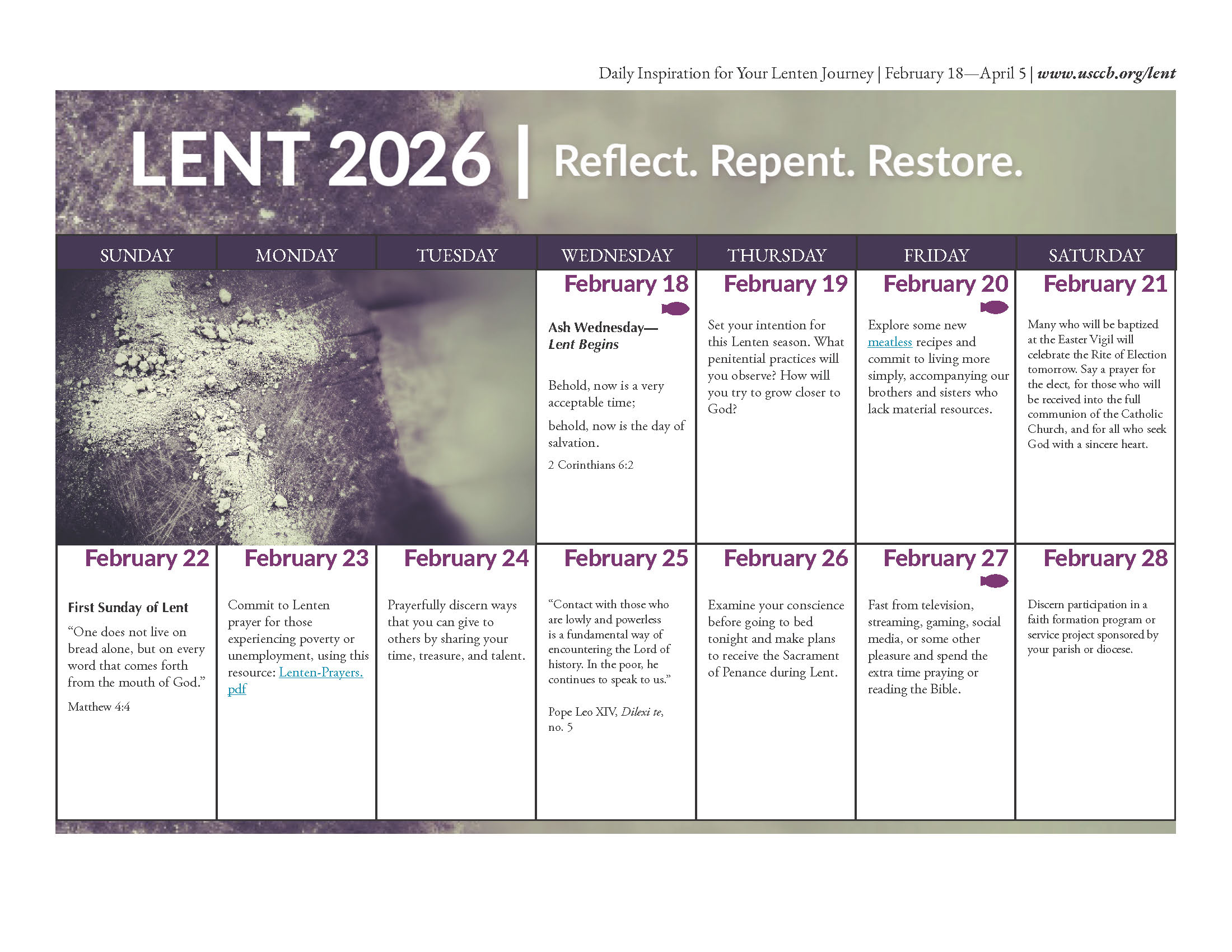
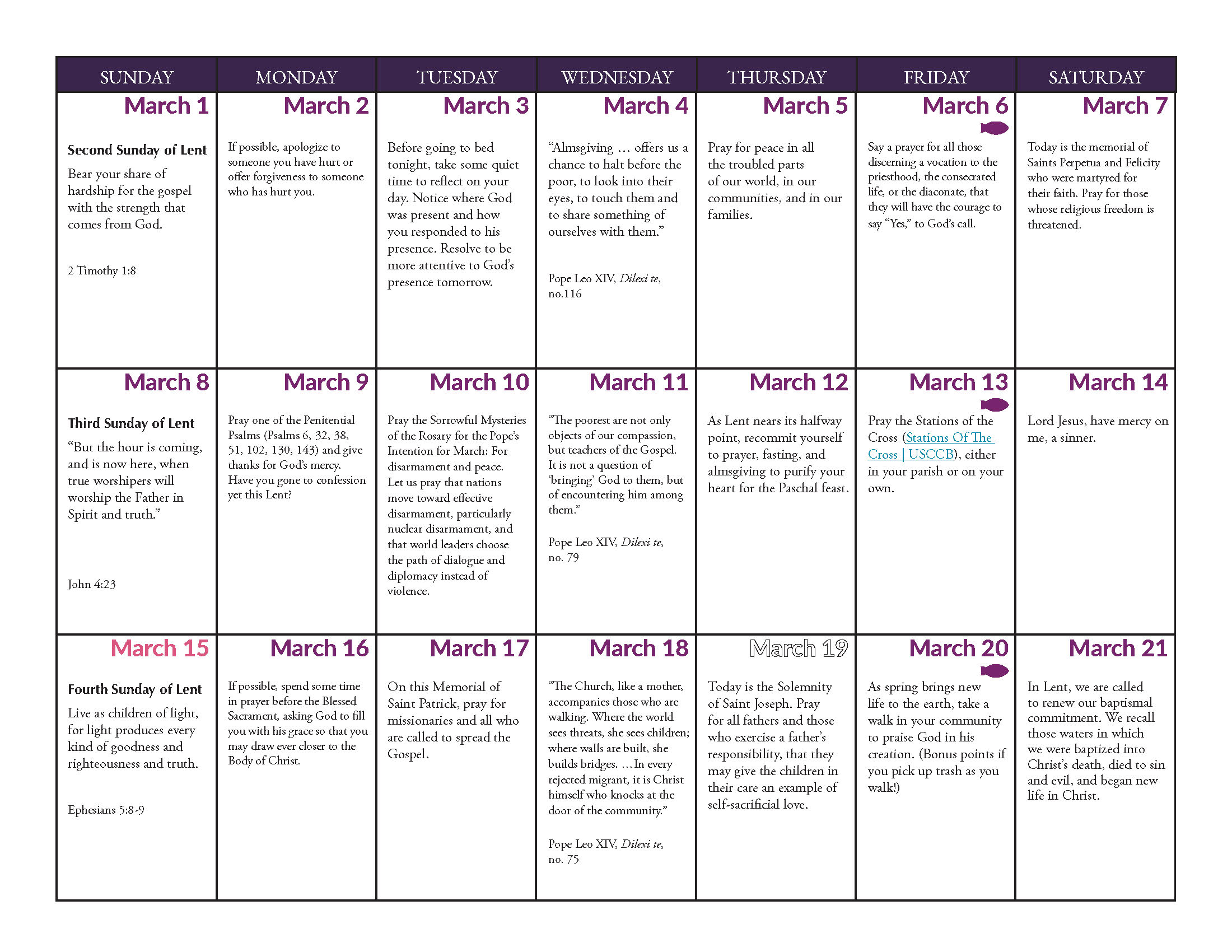
Lenten Calendar
 |
 |
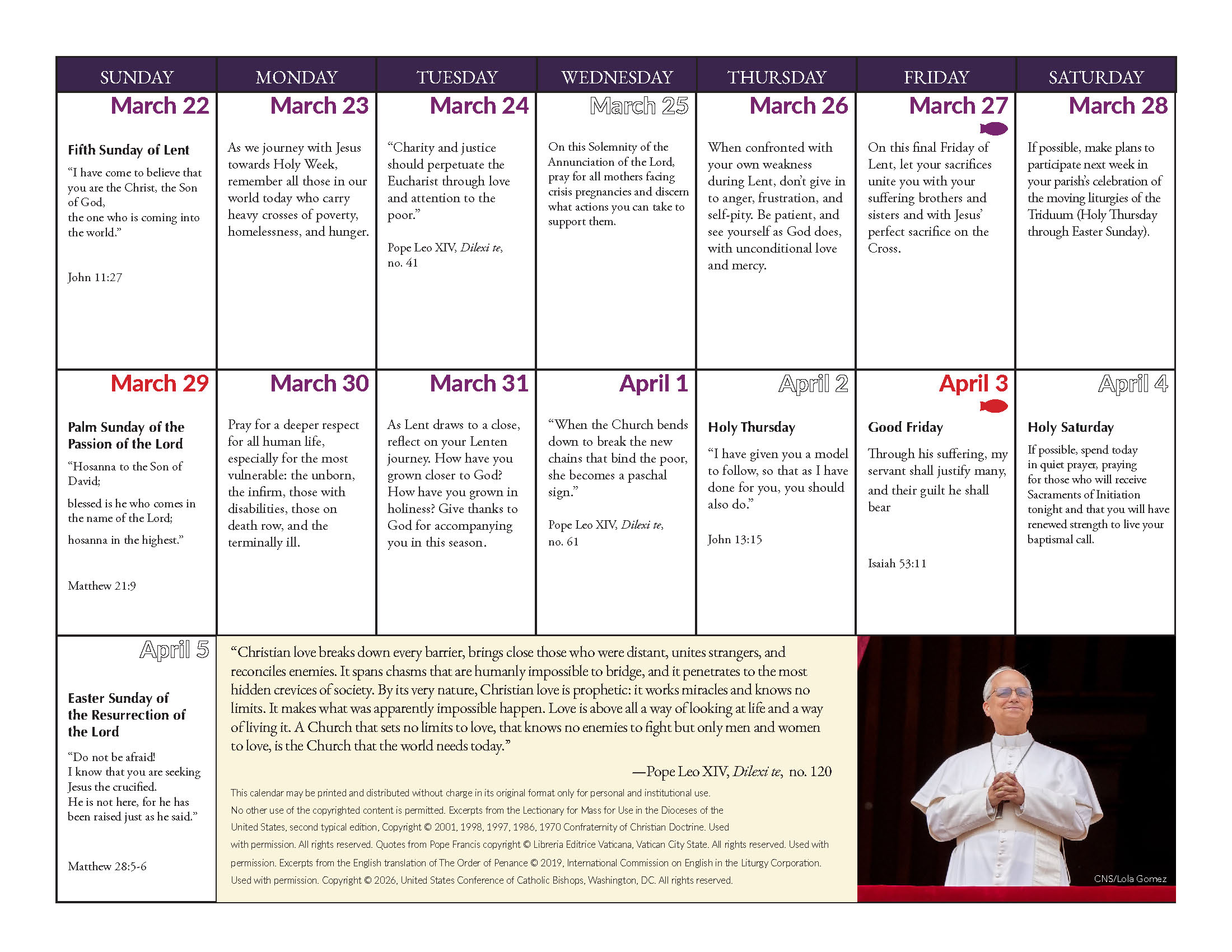 |
Lent for Teens
- Not the Same Lent: Four Ways to Engage Teenagers in the Lenten Season
- 40 Ways for 40 Days: Staying Rooted in Prayer this Lent
- 102 Things You Should Really Give Up For Lent
- Into the Desert: How to Live Your Lent with Purpose
Reflections during Lent for Young Adults
- For Young Adults and Adults: 5 weekly reflections(Arch. Seattle)- English and Spanish
- Things to do During Adoration
Retreats
The Sacrament of Reconciliation
The Sacrament of Reconciliation
Pray Unceasingly (Spanish)
Prayer Resource in Vietnamese
Fast for Love
Joel 2: 13-13 “Return to me with your whole heart, with fasting, weeping, and mourning. Rend your hearts, not your garments, and return to the LORD, your God.”
What are the rules about fasting and abstinence? Why should we perform penance? Why can’t we eat meat on Fridays? Learn the answers to these questions and more.

Sentido Espiritual del Ayuno
- El ayuno nos ayuda a vivir en santidad
- La gracia del ayuno – La Cuaresma, un tiempo de adelantos
- Toquen la trompeta! ¡Congreguen al pueblo! – Las bendiciones del ayuno
- La clave es la oración – Cómo distinguir un ayuno auténtico de uno falso
- USCCB Reflexion sobre el ayuno cuaresmal
- Una reflexión sobre el ayuno cuaresmal
- Catholic-link: Ayuno
Holy Week
Stations of the Cross
- Praying the Stations of the Cross – USCCB\
- Stations of the Cross(Word on Fire) – with Bishop Robert Barron
- Stations of the Cross – CRS Video Reflections
- Stations of the Cross for Vocations
- Spanish Stations of the Cross by the USCCB
Spanish Resources
- Para Jóvenes y Adultos: Vía Crucis – de la Archidiócesis de Seattle
- Un Viaje a Traves de La Semana Santa – de la Diocesis de Phoenix
- Semana Santa 2024
Visitation of the Seven Churches (Visita Iglesia)
Holy Week Lent Guides
Reconciliation Parish Schedule
Visitation of the Seven Churches Worship Guide
Download the Guide by language
Holy Week Liturgy: Structure and Meaning of Rites (Vietnamese)
Family Activities/Actividades Para Familias
More About Lent
More About Lent
Prayers
- A Heart Open to God’s Will: The Annunciation, A Novena
- Break Open the Tomb
- Ecumenical Stations of the Cross
- Meet Me in the Desert
- Prayer in Honor of the Five Wounds of Christ
- Prayer of Giving
- Prayer for the Poor
- Scriptural Rosary: The Sorrowful Mysteries
- Stations of the Cross for Vocations
- The Seven Penitential Psalms & the Songs of the Suffering Servant
- We Hunger and Thirst for Holiness
- Lent 2024 calendar
Living the Faith
- 10 Things to Remember During Lent
- 10 Pointers for Prayer
- A Good Friday Reflection
- A Reflection on Lenten Fasting
- Additional Ways to Pray
- Almsgiving: Love in a Troubled World
- Confession: Try it! You’ll like it!
- Finding Hope in the Suffering
- Lenten Resolutions for Married Couples, Inspired by Pope Francis
- Letting Go to Follow Christ
- Reflections on the Song of the Suffering Servant
- Reconciled to Right Relationship, Called to Heal and Restore
- Six Ways to Evangelize during Lent
Facts of Faith
- 18 Questions on the Paschal Triduum
- Examination of Conscience
- Giving things up for Lent
- Jesus Forgave Sins
- Lenten Almsgiving
- Palms vs. Passion
- Preparing for the Lenten Fast
- Questions and Answers about Lent
- Raise Up. Sacrifice. Offer.
- The Annunciation
- What is Easter?
- Who are the Catechumens?
- Why Ashes?
- Why is Lent 40 Days?
- What You Need to Know About Lent
Maryknoll Lent Resources – Sunday scripture reading reflection guides for families, Small Christian Communities, Individuals (resources in English and Spanish).
Cuaresma
Mùa Chay Thánh
Ý Nghĩa và Tinh Thần của Mùa Chay
Thứ Tư Lễ Tro:
10 ĐIỀU BẠN CẦN BIẾT VỀ THỨ NĂM TUẦN THÁNH
Giáo Lý Mùa Chay_Lent Catechism
Hành Trình 40 Ngày Mùa Chay – Journey of 40 Days of Lent
