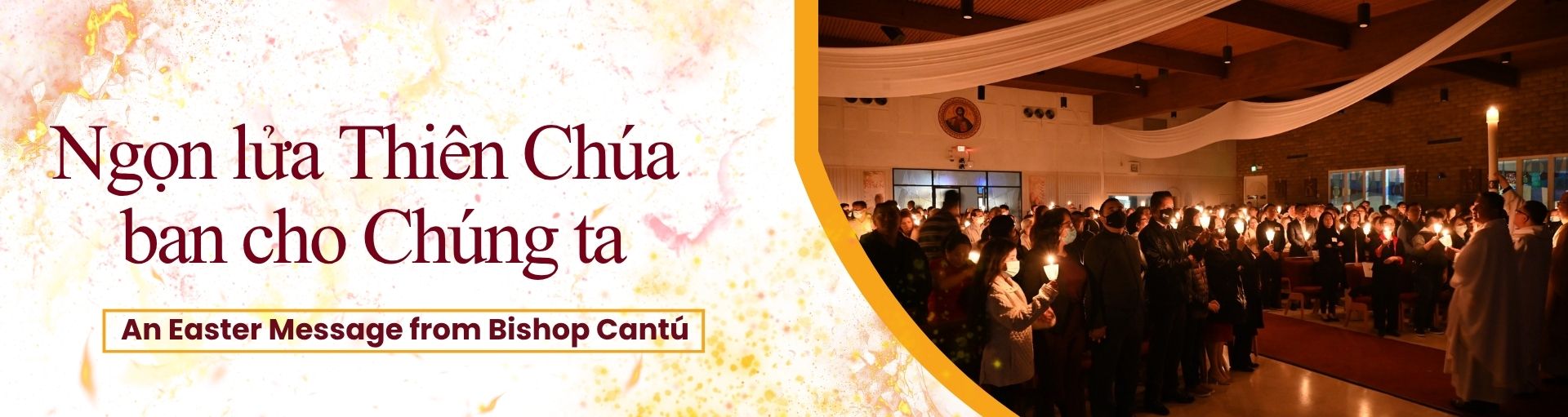
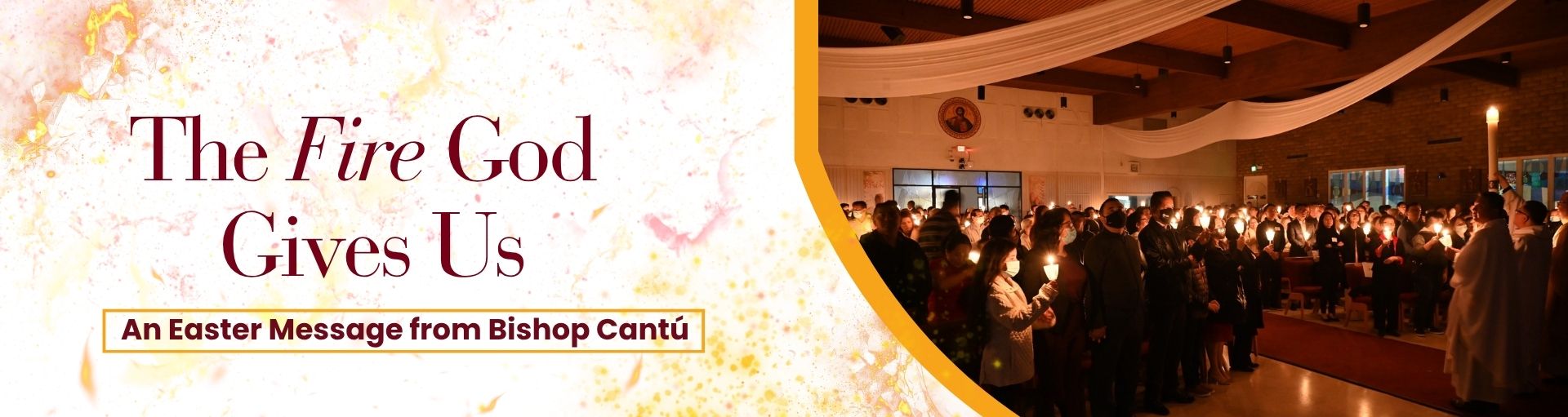
Bishop Cantú’s Easter Message: The Fire God Gives Us
Spanish Vietnamese

Dear brothers and sisters in Christ, 

In Greek mythology, the titan Prometheus stole fire from the gods in order to give it to human beings, giving humans the power to build civilization, technology, and to advance in knowledge. Prometheus was punished by Zeus who had purposely kept fire from human beings in order to keep them powerless, dependent on the gods. For the ancient Greeks, fire represented development, technology, and civilization because it allowed humanity to warm themselves, cook food, and craft tools. It represented the basis of civilization. 

 In contrast, at the Easter Vigil, the most sacred celebration in the Catholic liturgical year, the liturgy begins outside of the church building with the blessing of a fire. The prayer of blessing states, “O God, who through your Son bestowed upon the faithful the fire of your glory, sanctify + this new fire, we pray, and grant that, by these paschal celebrations, we may be so inflamed with heavenly desires, that with minds made pure we may attain festivities of unending splendor.” Simply put: God lights a fire in us so we can long for heaven and live in His light. Unlike Zeus, our God shares fire with us, not to control us, but to lead us toward His glory in heaven.  

 Humanity has a glorious goal. In the biblical tradition God creates mankind in his own image and likeness (Gn. 1:27), calling us from the very beginning to live in harmonious friendship and communion with God. He gives mankind intelligence and free will and set clear boundaries we were not meant to cross (represented by the “tree of knowledge of good and evil,” cf. Gn. 2:17). Thus, while God creates us in his image and likeness, we remain finite humans; we are not gods – and yet we are called to share in God’s glorious splendor.  

 The second century saint, Irenaeus, famously said that “the glory of God is [humanity] fully alive, and the life of [humans] consists in beholding God.” There is a beautiful exchange here: God delights in us when we thrive; and we reach our full potential when we live in friendship with God. Thus, the biblical God is not petty and jealous like Zeus of Greek mythology, keeping gifts just to keep humans powerless and dependent. Rather, the biblical God creates humanity with intelligence and free will, wanting mankind to flourish. Humanity flourishes to the fullest when we are in friendship and communion with the Creator, a personal and loving God. Our God desires the best for us and gives us the tools to achieve, through Christ’s grace, that glory. 

 Pope Leo has reminded us of the wise and prayerful insight of St. Augustine when he stated, “You made us for yourself, O God, and our hearts are restless until they rest in you.” Indeed, God made us to find our fulfillment in himself, and so our ultimate happiness is found in the God of glory. Nothing else will ever fully satisfy us. 

 God instilled in us the fire of his love, the fire of longing for the divine, for the transcendent, for something greater than ourselves. We ignite that fire by loving God and neighbor. We do not need to carry “stolen fire,” for God has instilled it in our hearts and souls from the beginning so that we might have friendship and communion with the loving Creator. Thus, with that fire of faith, we build together with God a civilization of love – the Kingdom of God. Especially in this Easter Season, as we contemplate the Paschal Candle in our churches, lighted from the Easter fire, may we glory in the God who shares with us the fire of his love. Happy Easter! 

 Most Rev. Oscar Cantú
Bishop of San José 
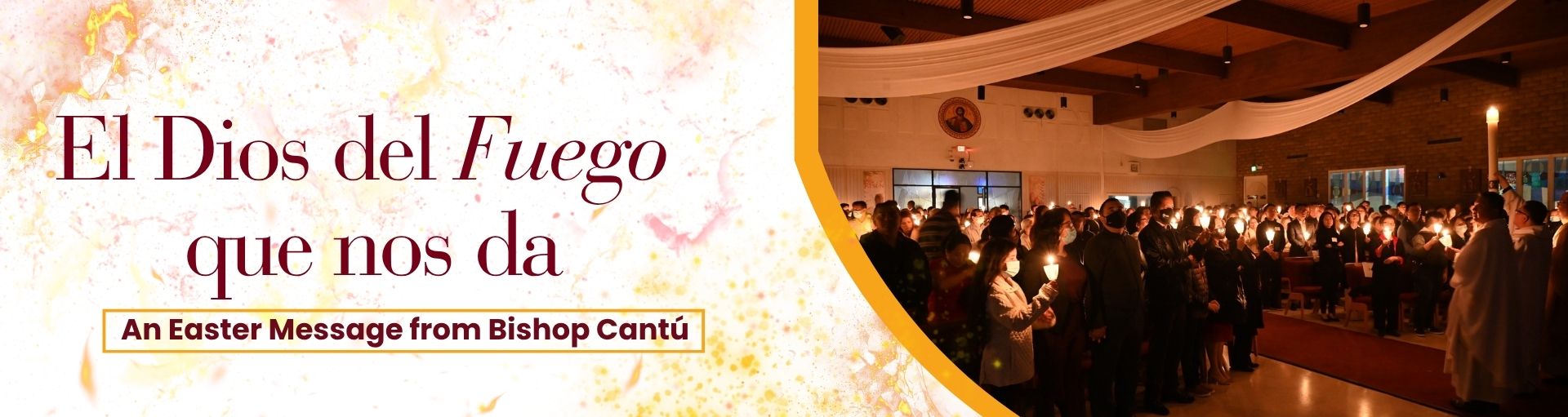
Mensaje de Pascua del obispo Cantú: El Dios del Fuego que nos da

English | Vietnamese

Queridos hermanos y hermanas en Cristo,

En la mitología Griega, el titán Prometeo robó el fuego a los dioses para entregárselo a los humanos, otorgándoles así el poder de construir la civilización, desarrollar la tecnología y avanzar en el conocimiento. Prometeo fue castigado por Zeus, quien deliberadamente había privado a los humanos del fuego para mantenerlos impotentes y dependientes de los dioses. Para los antiguos griegos, el fuego representaba el desarrollo, la tecnología y la civilización, ya que permitía a la humanidad calentarse, cocinar y fabricar herramientas. Representaba la base de la civilización.

En contraste, en la Vigilia Pascual, la celebración más sagrada del año litúrgico Católico, la liturgia comienza fuera de la iglesia con la bendición del fuego. La oración de bendición dice: “Oh Dios, que por medio de tu Hijo has dado a los fieles el fuego de tu luz, santifica + este fuego, y concédenos que la celebración de estas fiestas pascuales encienda en nosotros deseos tan santos que podamos llegar con corazón limpio a las fiestas de la eterna luz.” En pocas palabras: Dios enciende un fuego en nosotros para que anhelemos el cielo y vivamos en su luz. A diferencia de Zeus, nuestro Dios comparte el fuego con nosotros, no para controlarnos, sino para guiarnos hacia su gloria celestial.

La humanidad tiene un propósito glorioso. En la tradición bíblica, Dios crea al ser humano a su imagen y semejanza (Gn 1:27), llamándonos desde el principio a vivir en armonía y comunión con Él. Nos otorga inteligencia y libre albedrío, y establece límites claros que no debemos traspasar (representados por el “árbol del conocimiento del bien y del mal,” cf. Gn 2:17). Así, aunque Dios nos crea a su imagen y semejanza, seguimos siendo seres humanos finitos; no somos dioses, y sin embargo, estamos llamados a participar de su glorioso esplendor.

El santo del segundo siglo, Ireneo, afirmó que “la gloria de Dios es el hombre plenamente vivo y la vida humana consiste en contemplar a Dios.” Aquí se establece un hermoso diálogo: Dios se deleita en nuestro bienestar cuando prosperamos; y alcanzamos nuestro máximo potencial cuando vivimos en comunión con Él. Así, el Dios bíblico no es mezquino ni celoso como Zeus en la mitología Griega, que guardaba sus dones solo para mantener a los humanos impotentes y dependientes. Al contrario, el Dios bíblico crea a la humanidad con inteligencia y libre albedrío, deseando que florezca. La humanidad alcanza su máximo esplendor cuando está en comunión con el Creador, un Dios personal y amoroso. Nuestro Dios anhela lo mejor para nosotros y nos brinda las herramientas para alcanzar, mediante la gracia de Cristo, esa gloria.

El Papa León nos recordó la sabia y profunda reflexión de San Agustín cuando afirmó, “Nos has hecho para ti, Señor, y nuestro corazón está inquieto hasta que descanse en Ti.” En efecto, Dios nos creó para que encontráramos nuestra plenitud en él, y por eso nuestra felicidad suprema se halla en el Dios de la gloria. Nada más podrá jamás satisfacernos plenamente.

Dios nos infundió el fuego de su amor, el anhelo de lo divino, de lo trascendente, de algo superior a nosotros mismos. Encendemos ese fuego amando a Dios y al prójimo. No necesitamos llevar un “fuego robado,” pues Dios lo ha infundido en nuestros corazones y almas desde el principio para que podamos tener amistad y comunión con el Creador amoroso. Así, con ese fuego de fe, construimos junto a Dios una civilización del amor: el Reino de Dios. Especialmente en este tiempo de Pascua, al contemplar el Cirio Pascual en nuestras iglesias, encendido por el fuego Pascual, gloriémonos en el Dios que comparte con nosotros el fuego de su amor. ¡Felices Pascuas!

Reverendísimo Oscar Cantú
Obispo de San José


Sứ điệp Phục sinh của Đức Giám mục Cantú: Ngọn lửa Thiên Chúa ban cho Chúng ta

English | Spanish

Kính gửi quý anh chị em trong Chúa Ki-tô,

Trong thần thoại Hy Lạp, vị thần titan Prometheus đã đánh cắp lửa từ các vị thần để ban cho loài người, giúp con người xây dựng nền văn minh, phát triển công nghệ và tri thức. Prometheus đã bị Zeus trừng phạt vì Zeus cố tình không cho loài người sử dụng lửa để giữ con người trong trạng thái bất lực, phụ thuộc vào các vị thần. Đối với người Hy Lạp cổ đại, lửa tượng trưng cho sự phát triển, công nghệ và văn minh vì lửa cho phép loài người sưởi ấm, nấu nướng và chế tạo công cụ. Lửa là biểu tượng nền móng của văn minh nhân loại.


Trái lại, trong Lễ Vọng Phục Sinh, lễ mừng thiêng liêng nhất trong năm phụng vụ Công Giáo, phụng vụ bắt đầu bên ngoài nhà thờ với nghi thức làm phép lửa. Sau đây là lời nguyện làm phép: “Lạy Chúa, Chúa đã sai Con Một đến giãi ánh vinh quang rực rỡ của Chúa vào lòng tín hữu, xin thánh + hóa ngọn lửa mới này, và trong suốt thời gian mừng Lễ Vượt Qua, xin cho niềm khao khát Nước Trời cũng bừng lên thiêu đốt lòng chúng con, và thanh tẩy muôn ngàn tội lỗi, để mai sau chúng con xứng đáng vào thiên quốc tham dự lễ ánh sáng muôn đời.” Nói đơn giản là: Thiên Chúa thắp sáng ngọn lửa trong lòng chúng ta để chúng ta có thể khao khát thiên đàng và sống trong ánh sáng của Ngài. Không giống như Zeus, Thiên Chúa chia sẻ ngọn lửa với chúng ta, không phải để kiểm soát chúng ta mà để dẫn dắt chúng ta đến với vinh quang của Ngài trên thiên đàng.


Nhân loại có một mục tiêu vinh quang. Theo truyền thống Kinh Thánh, Thiên Chúa tạo dựng con người theo hình ảnh và tương đồng với Ngài (Gn. 1:27), mời gọi chúng ta sống trong tình bạn hòa hợp và hiệp thông với Thiên Chúa ngay từ lúc ban đầu. Thiên Chúa ban cho loài người trí tuệ và sự tự do ý chí, đồng thời đặt ra những ranh giới rõ ràng mà chúng ta không được vượt qua (tượng trưng bởi “cây biết điều thiện và điều ác”, xem. Gn. 2:17). Do vậy, mặc dù Thiên Chúa tạo dựng con người theo hình ảnh và tương đồng với Ngài, chúng ta không phải là các vị thần – tuy nhiên chúng ta vẫn được mời gọi chia sẻ vinh quang huy hoàng của Ngài.


Vị thánh thế kỷ thứ hai, Irênê, có câu nói nổi tiếng rằng: “vinh quang của Thiên Chúa là [con người] được sống viên mãn và sự sống của [con người] là chiêm ngắm vinh quang Thiên Chúa”. Đây là mối tương giao diệu kỳ: Thiên Chúa vui mừng khi chúng ta trưởng thành, và chúng ta đạt trọn vẹn tiềm năng khi sống trong tình bạn với Ngài. Như vậy, Thiên Chúa trong Kinh Thánh không nhỏ nhen và ghen tị như Zeus trong thần thoại Hy Lạp, giữ lại những ân huệ chỉ để khiến con người bất lực và phụ thuộc. Thay vì thế, Thiên Chúa trong Kinh Thánh tạo dựng con người với trí tuệ và tự do ý chí, mong muốn con người phát triển. Nhân loại đạt đến đỉnh cao khi chúng ta sống trong tình bạn và hiệp thông với Đấng Tạo Hóa, Thiên Chúa gần gũi và đầy yêu thương. Thiên Chúa mong muốn điều tốt nhất cho chúng ta và ban cho chúng ta những phương tiện để nhờ ân sủng Ngài mà đạt được vinh quang.


Đức Thánh Cha Lêo đã nhắc nhở chúng ta về sự hiểu biết khôn ngoan và lòng thành kính của Thánh Augustinô khi ngài nói: “Lạy Chúa, Chúa đã dựng nên chúng con cho Chúa, nên lòng chúng con khắc khoải cho đến khi nghỉ yên trong Chúa”. Thực vậy, Thiên Chúa giúp chúng ta tìm thấy sự viên mãn nơi Ngài, và vì vậy, niềm hạnh phúc tột đỉnh chỉ có thể tìm thấy trong Thiên Chúa của vinh quang. Không điều gì khác có thể thỏa mãn trọn vẹn lòng khát khao của chúng ta.


Thiên Chúa gieo trong lòng chúng ta ngọn lửa tình yêu, ngọn lửa khát khao hướng đến điều thiêng liêng, điều siêu việt, điều gì đó vĩ đại hơn chính bản thân mình. Chúng ta thắp sáng ngọn lửa ấy bằng cách yêu thương Thiên Chúa và người lân cận. Chúng ta không cần mang theo “ngọn lửa bị đánh cắp”, bởi Thiên Chúa đã gieo trong trái tim và linh hồn chúng ta ngọn lửa từ thuở ban đầu, để chúng ta được sống trong tình bạn và hiệp thông với Đấng Tạo Hóa đầy yêu thương. Do đó, nhờ ngọn lửa đức tin, chúng ta cùng với Thiên Chúa xây dựng nền văn minh tràn đầy tình yêu – Nước Thiên Chúa. Đặc biệt trong Mùa Phục Sinh này, khi chúng ta chiêm ngắm Nến Phục Sinh trong các nhà thờ của chúng ta, được thắp sáng từ ngọn lửa Phục Sinh, nguyện chúng ta được vinh quang trong Thiên Chúa, Đấng chia sẻ với chúng ta ngọn lửa tình yêu của Ngài. Chúc Mừng Lễ Phục Sinh!


Giám Mục Oscar Cantú

Giám Mục Giáo Phận San José

California Bishops Statement on Newly Minted Farmworkers Day.

The following is a statement on the newly minted Farmworkers’ Day by the California Conference of Catholic Bishops:

Our hearts are deeply grieved by the stories of women who suffered abuse at the hands of Cesar Chavez, some at a very young age. Their voices carry a pain that must be received with reverence—heard, believed, and honored. The suffering they have borne, often in silence for many years, is a profound injustice, and we stand with them in sorrow, in solidarity, and in prayer.

As California marks the newly established Farmworkers Day, we are reminded that this moment must be not only one of remembrance but also of renewal. It is an opportunity to recommit ourselves to the dignity, safety, and well-being of the men and women whose labor sustains us all. The work of farmworker advocacy—protecting workers, supporting families, and upholding human dignity—must continue with clarity, integrity, and vigilance.

In this moment of reflection, confronting these difficult truths does not diminish the mission of farmworker advocacy. Rather, it calls us to pursue it with even greater humility, honesty, and care. We look to honor the legacy of farmworker contributions, provide justice and support today, and safeguard their future. 

On this Farmworkers Day, we renew our commitment to ensure that farmworkers are protected, respected, and provided with just salaries, benefits, and working conditions. We pray for the courage of all survivors to share their stories, and for all of us to listen with open hearts. May our Blessed Mother, Santa Maria de Guadalupe, wrap all her wounded and suffering children in her maternal embrace.

40 Days for Life Fall 2026 Campaign

This fall, let us unite in prayer, fasting, and peaceful witness for the sanctity of life. Your group is warmly invited to participate with charity and hope — one hour of prayer on the sidewalk can bring God’s mercy and save lives. Together, we can be a powerful beacon of Christ’s love in our community.
Sign up today! Thank you for answering the call!

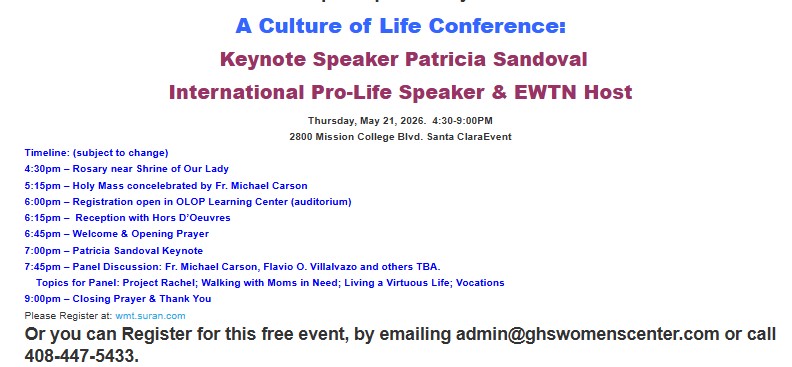
A Culture of Life Conference

Thursday, May 21, 2026 from 4:30pm to 9:00pm at Our Lady of Peace Auditorium – 2800 Mission College Blvd, Santa Clara, CA
Featuring Keynote Speaker – Patricia Sandoval – International Pro-Life Speaker and EWTN Host. Includes a Plus a Pro-Life panel discussing Project Rachel and Walking with Moms in Need, Living a Virtuous Life, and Discerning a Vocation.
FREE ENTRY – kindly RSVP.
For more information, please see Guadalupe Hope Society – Friends of Guadalupe Hope Society

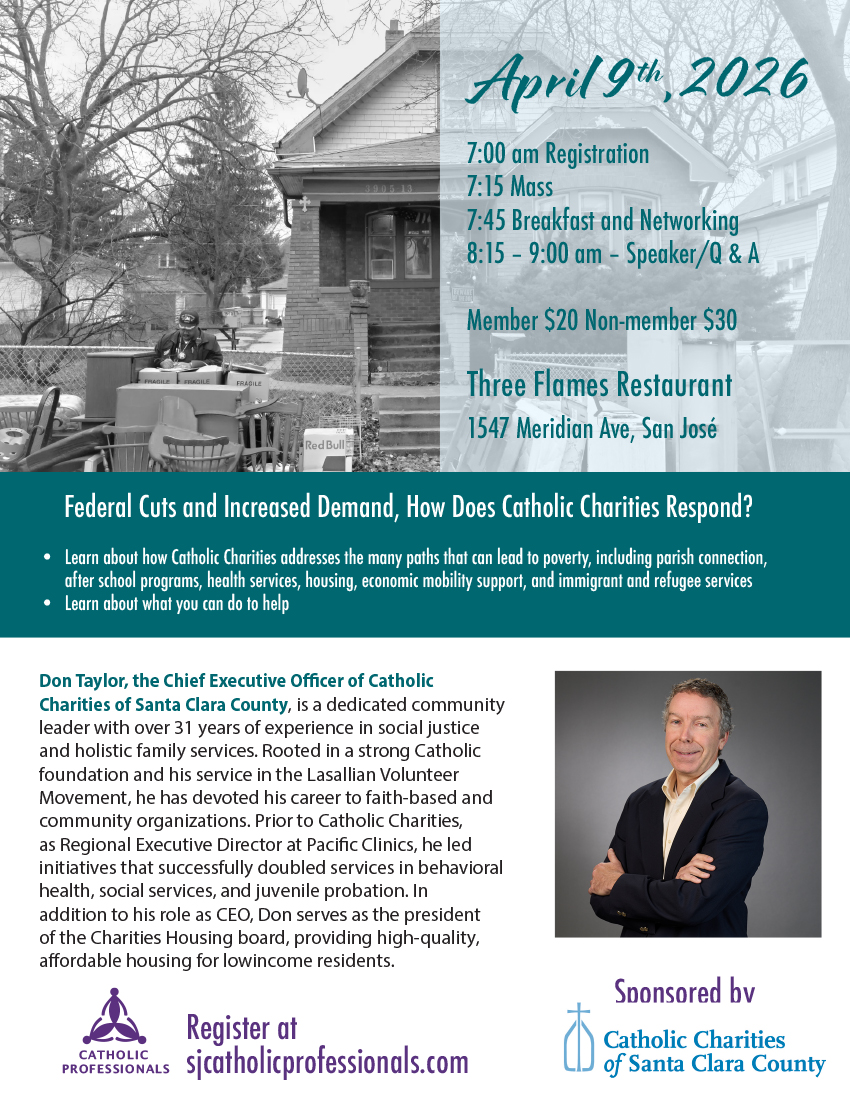
Federal Cuts and Increased Demand, How Does Catholic Charities Respond?

• Learn about how Catholic Charities addresses the many paths that can lead to poverty, including parish connection,
after school programs, health services, housing, economic mobility support, and immigrant and refugee services
• Learn about what you can do to help

Diocese of San Jose Statement: Regarding Allegations Against Cesar Chavez

The Diocese of San José is deeply troubled by the serious and credible allegations of sexual abuse that have come to light against Cesar Chavez. We stand first and foremost with those who have been harmed, including those who have shown courage in coming forward publicly.  

Listening to Those Who Come Forward  

Having walked through our own reckoning as a Church with the harm done to victims/survivors of sexual abuse, we know that our response must begin with the victims/survivors. We stand with them. This is not a political stance. It is a pastoral one, rooted in the Catholic conviction that the dignity of every human person demands we take seriously the harm done to them. As Catholics, we are called to uphold the dignity of every human person, to listen to those who have been hurt, and to seek justice rooted in truth. 

The Farm Worker Movement 

In this difficult moment, we must remain anchored in the truth that the allegations against one individual do not diminish the vital and ongoing work of farm workers and those who advocate for them. The men and women who labor in our fields — often unseen, often unprotected — deserve dignified working conditions, fair wages, and the full protection of their rights. That cause is just. It was just before Cesar Chavez, and it remains just today. The movement was built by many hands and many hearts, and it will continue. Our solidarity with farm workers is unwavering. 

Our Actions  

Bishop Cantu has asked that all statues, plaques, wall hangings, artwork, or other visual representations of Cesar Chavez be removed from parish properties, school buildings, and all diocesan facilities as is feasible. We do this not as an act against the farm worker movement but as a response to his own actions, which have made it untenable for us to continue honoring his image in our buildings. We do not remove these items to diminish the farm worker movement, but to be faithful to the survivors. 

Additionally, the Diocese of San José will observe March 31 as Farm Workers Day — a day dedicated to honoring the dignity, sacrifice, and essential contributions of the men and women whose labor sustains our communities and provides food for our tables. We encourage our parishes, schools, and ministries to mark Farm Workers Day with prayer, education, and acts of support for farm workers and their families. 

Upholding Our Principles 

The Diocese of San José reaffirms these principles: 

  • WE ACKNOWLEDGE… the pain of those in our community, particularly our Latino brothers and sisters, for whom the farm worker movement is deeply personal. 
  • WE STAND… in solidarity with victim/survivors. The Church’s concern, first and foremost, is for those who were harmed. 
  • We SUPPORT… the broader movement and those who continue to advocate with courage and integrity for the dignity of all who labor. 
  • WE PRAY… for the survivors, for our community, and for the wisdom to hold both the grief of this moment and our enduring commitment to the dignity of every worker, every woman, and every child.  

Reporting Abuse 

The Diocese of San José strictly adheres to a zero-tolerance policy and promptly notifies law enforcement and child protective services when abuse is reported, in accordance with mandated reporter laws. If an adult victim/survivor is looking to report a case of Clergy Abuse or sexual abuse involving Church personnel, we encourage them to first contact their local civil authorities (law enforcement). Once a report is filed with the local civil authorities, individuals are encouraged to contact the Diocesan Office for the Protection of Children & Vulnerable Adults at (408) 983-0113. All reports are confidential to protect the rights of the victim.  

Reports to the Diocese are accepted either by online submission or by phone. For online submission, please use the following URL to access our secure third-party reporting server designated for this purpose: https://opcva.ethicspoint.com/ or contact our toll-free 24-hour reporting hotline at 844-372-1691. 

Media Inquiries 

Please direct all media inquiries to Cynthia Shaw at the Diocesan Office of Communications at (408) 983-0228 or cynthia.shaw@dsj.org 

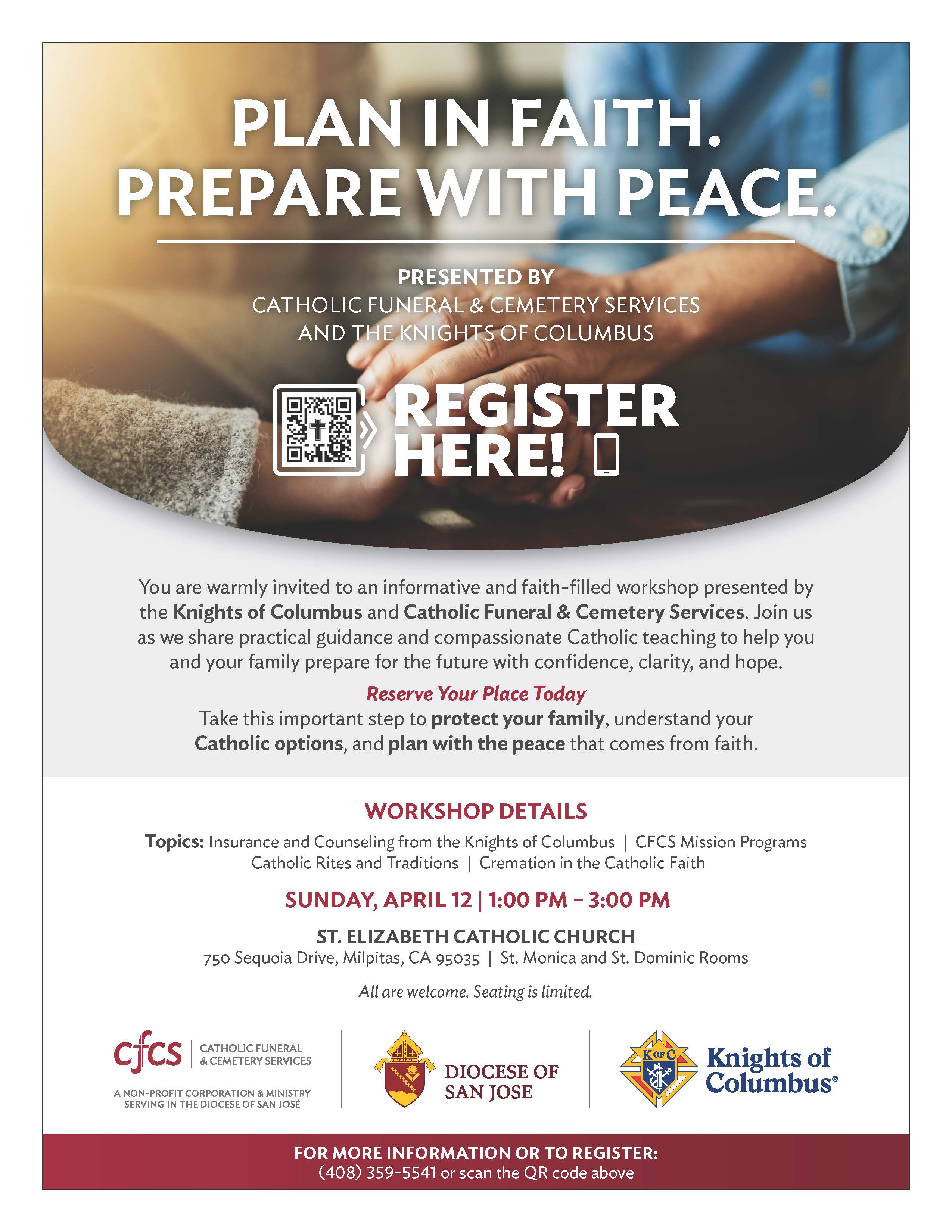
Faith & Planning Ahead Workshop – St. Elizabeth Catholic Church

Join the Knights of Columbus and Catholic Funeral & Cemetery Services for an informative, faith-filled workshop offering practical guidance and compassionate Catholic teaching to help you and your family prepare for the future. Topics include insurance and counseling, CFCS mission programs, Catholic rites and traditions, and cremation in the Catholic faith. Sunday, April 12, 1:00–3:00 PM at St. Elizabeth Catholic Church (St. Monica & St. Dominic Rooms). All are welcome; seating is limited.